• | PLAN YOUR VISIT | HOTEL

Menü

Explore the Palace

Explore the Palace

THE KÁROLYI KASTÉLY AS WE KNOW IT TODAY

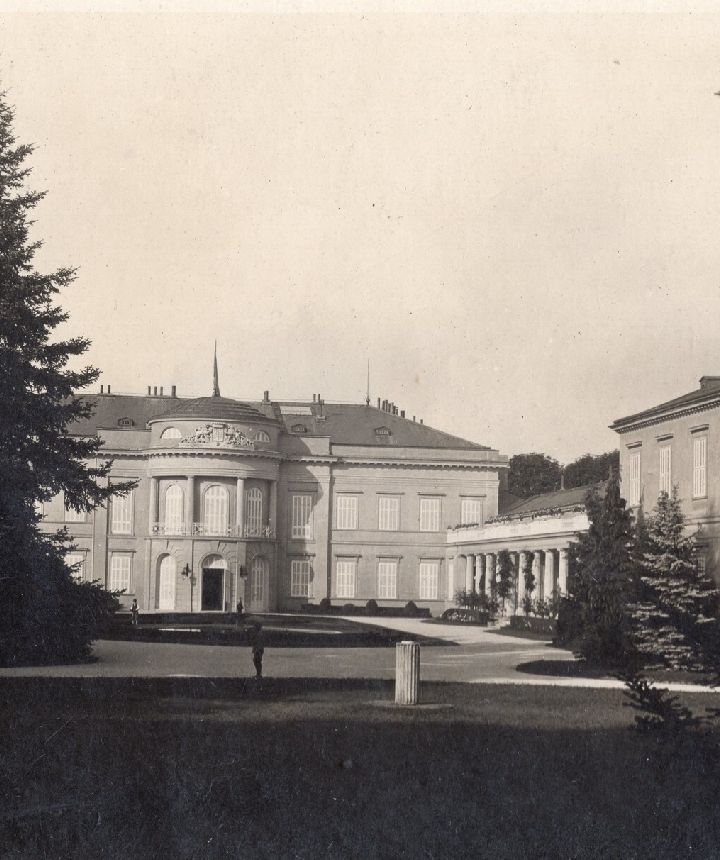
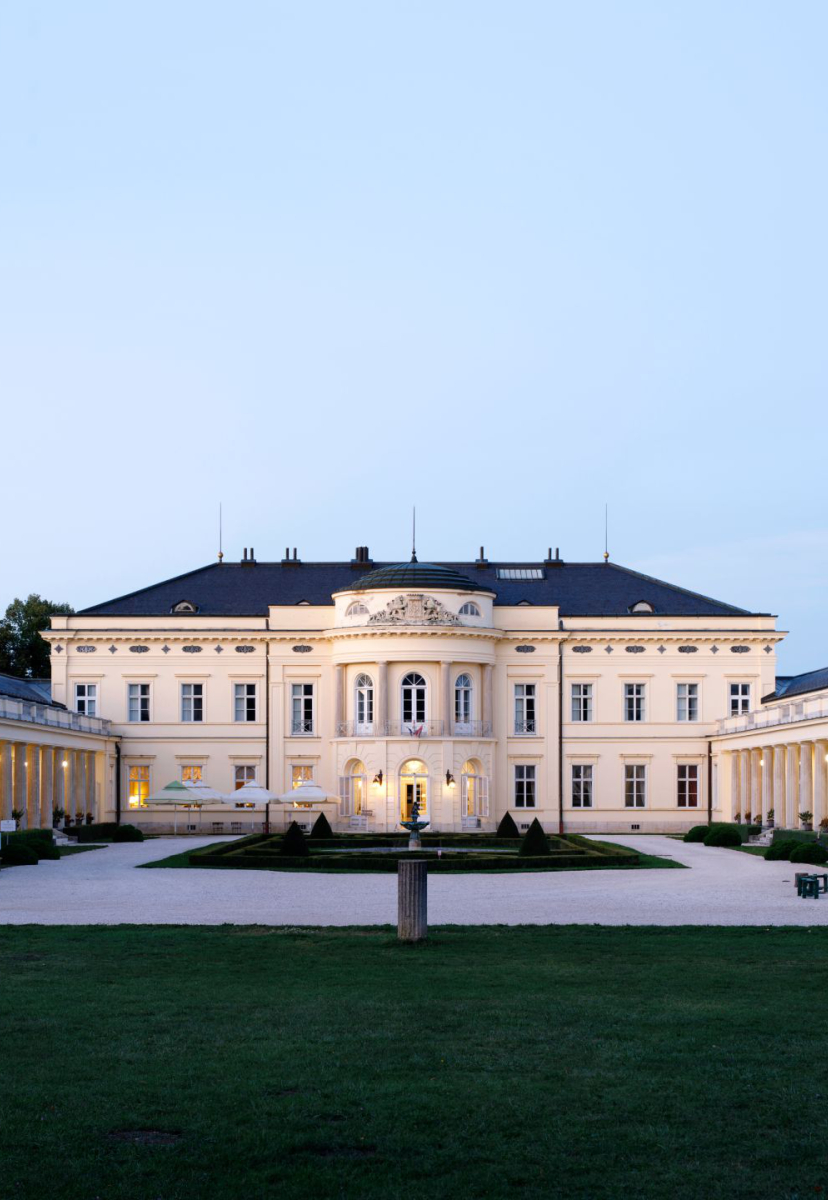
The Károlyi Kastély as we know it today reflects the state of the residence in 1910, when Count Joseph Károlyi undertook a major modernization project that gave the building its present appearance. The works combined modern comforts, architectural innovations, and the ambition to transform the estate into both a family home and a place of representation.

The interiors of the palace bear witness to the refined art of living of the Hungarian aristocracy, which survived the fall of the Austro-Hungarian Empire in 1918 and only truly disappeared in the aftermath of the Second World War.

The Károlyi Kastély as we know it today
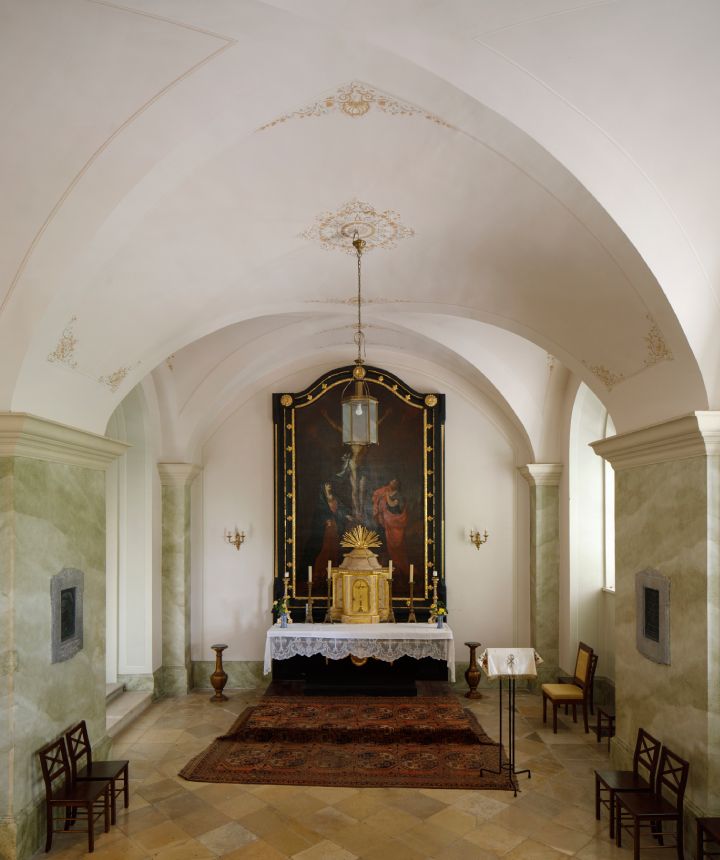
The chapel of the palace

THE SACRED HEART OF THE PALACE

The chapel preserves a remarkable Calvary painted in 1782 by Anton Zallinger, a pupil of Franz Anton Maulbertsch, and returned by the Museum of Fine Arts, Budapest, where it had been kept following the post-war nationalizations in Hungary. It reflects the central role that religion played in the lives of aristocratic families.

The first part of the estate to be restored after the family’s return in 1998, the chapel was reconsecrated and today hosts religious services, weddings, and classical music concerts.

THE ART OF ENTERTAINING

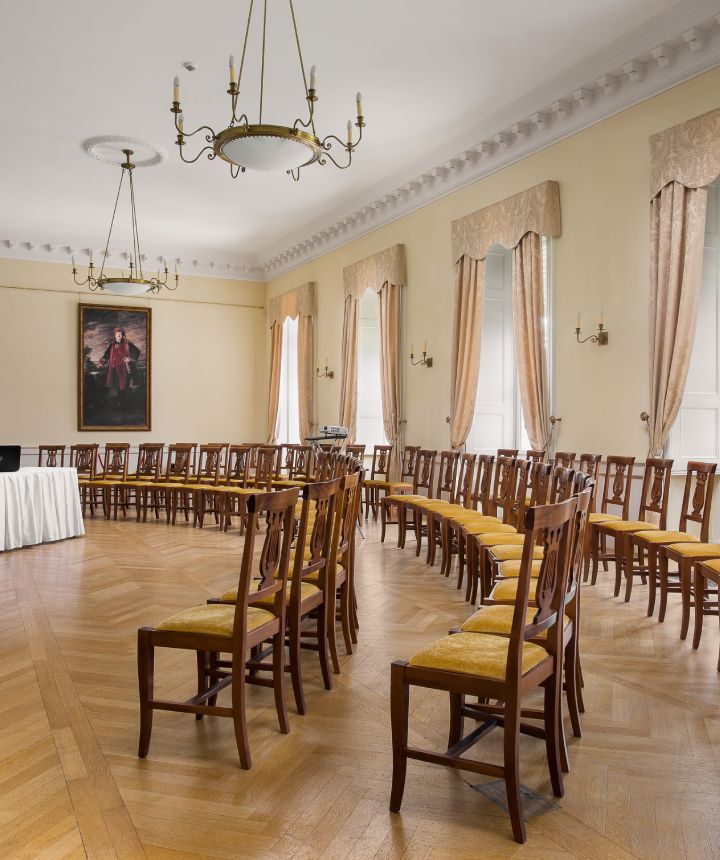
The grand salon, or ballroom, opens onto the terrace and the park, offering a magnificent setting for receptions. It was here that the Károlyi family welcomed their guests and held social gatherings. The writer Lajos Zilahy, a close friend of the family, stayed at the castle on several occasions and drew inspiration from this aristocratic world for his novel The Dukays.

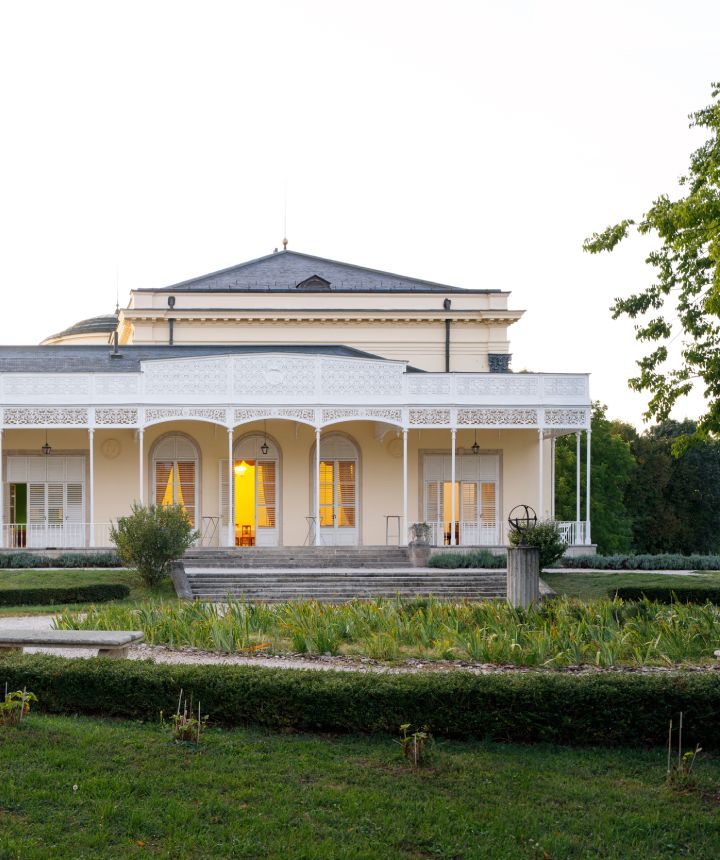
Built in the 1850s, the cast-iron terrace, known as the “lace terrace”, is one of the castle’s most distinctive features. It offers sweeping views over the English landscape park overlooking the lake and its gloriette.

The grand salon
The palace and its park

While the origins of the park date back to the creation of the estate, landscape architect János Hein gave it its present appearance in the 1910s. Around the palace, a French-style ornamental garden defines the space, extending into English-style clearings and a rock garden.

The wooded areas were also carefully designed and laid out with paths inviting visitors to stroll through the landscape. Today, the park covers 50 hectares. In 2024, a 2 km dendrological trail was created, introducing 300 new species from across the world.

For more information, click here.
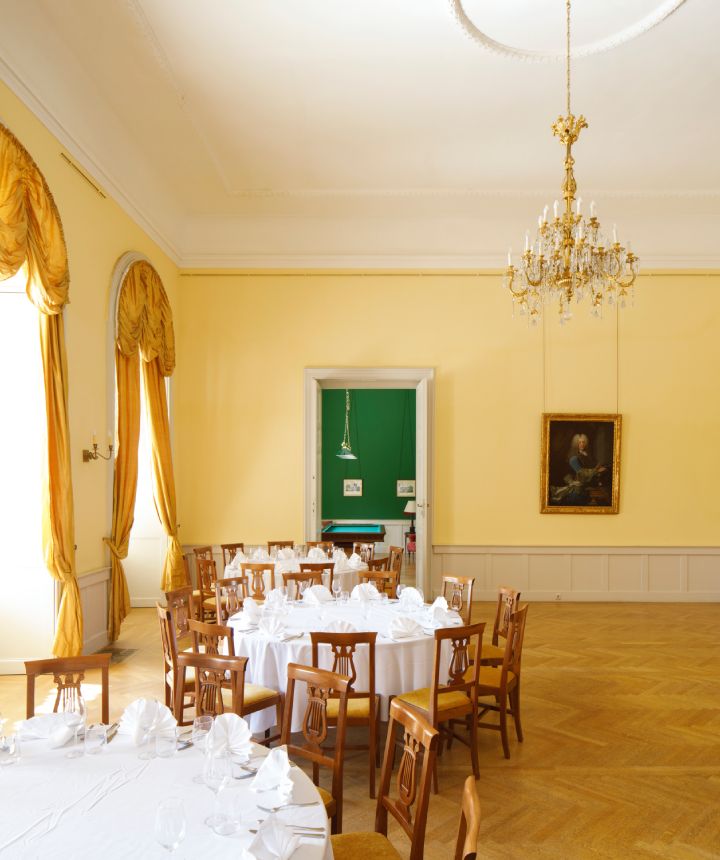
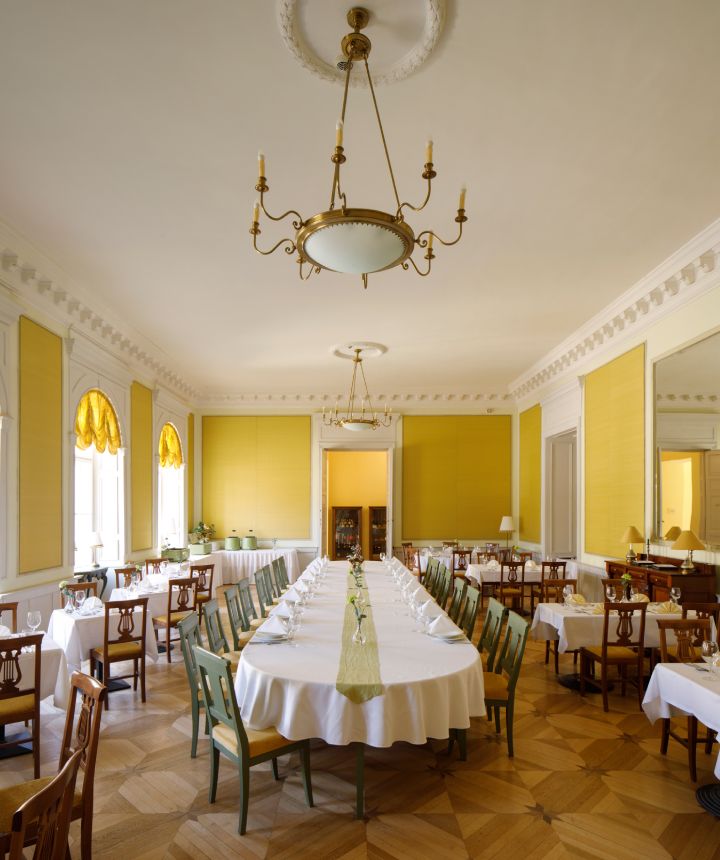
The grand dining room hosted official dinners and distinguished guests, including Regent Miklós Horthy, who was received here in 1919. The music room reflects the central role that music played in the life of aristocratic residences. Chamber music concerts were regularly held here, a tradition that continues today through the palace’s rich musical program.

The piano on display is a gift from the architect responsible for the palace’s restoration and was played by the French-Hungarian pianist György Cziffra.

The grand dining room
The Prefect’s Room

DUTY AND POLITICS

The Prefect’s Room (Főispán) recalls the public offices held by Count Joseph Károlyi, who served as Lord Lieutenant (Főispán) of Fejér County and the city of Székesfehérvár between 1917 and 1921.

A loyal supporter of the Habsburgs, he advocated the restoration of the monarchy, which he regarded as a guarantee of the country’s stability and prosperity, while also supporting a more progressive social policy. Following the failure of the attempts to restore King Charles IV to the throne, he chose to resign from his official positions. He was later elected as a Member of Parliament on a legitimist platform.

PRIVATE LIFE

Beyond the grand receptions, a more discreet family life continued.

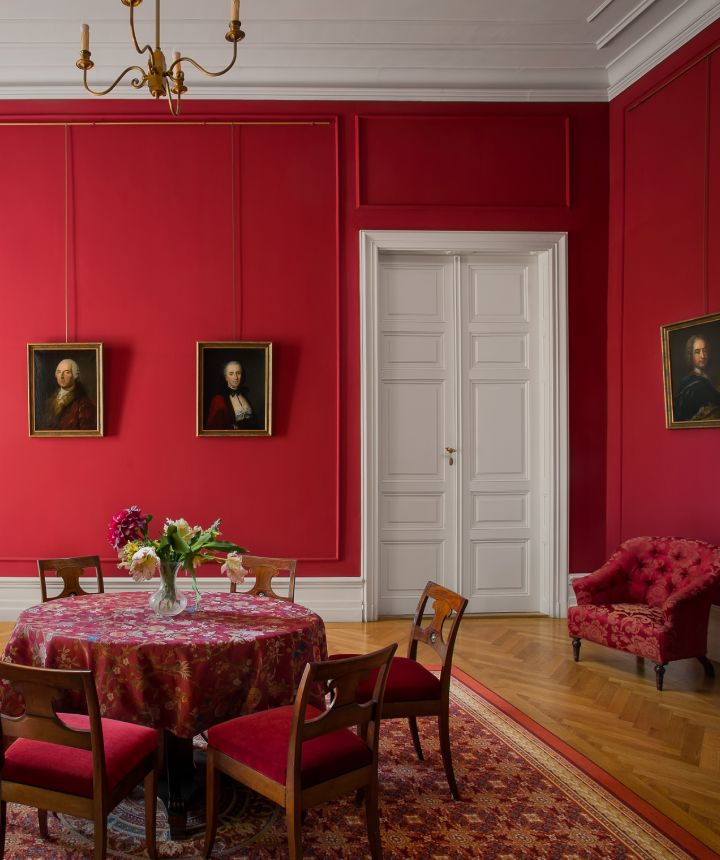
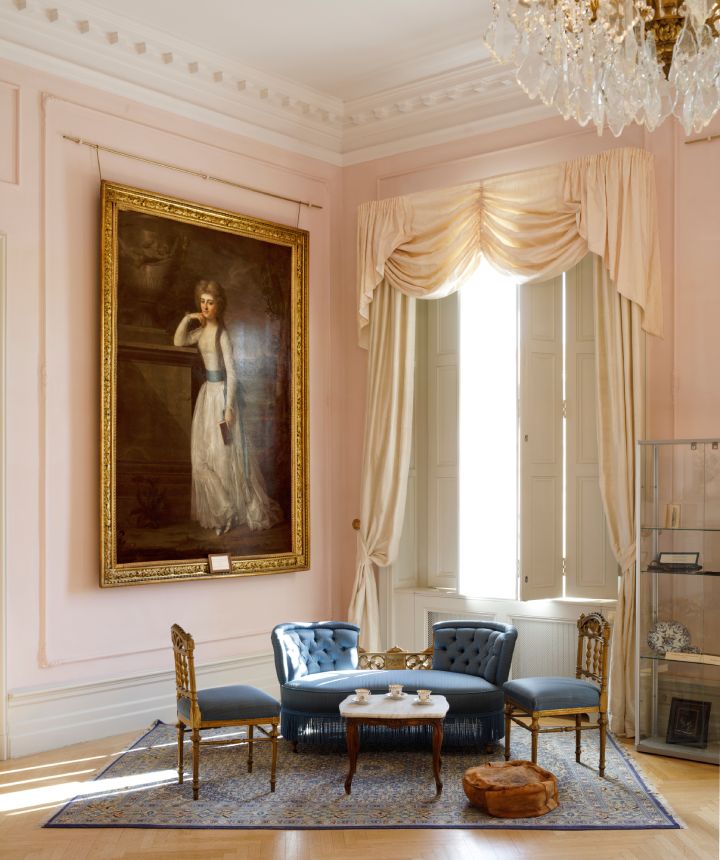
The Red Salon served as the family dining room on quieter occasions, while the adjoining Blue Salon was also reserved for the private circle of the household.

The present billiard room was once the boudoir of Daisy Wenckheim, the wife of Joseph Károlyi. During the Second World War, the family gathered there to secretly listen to BBC broadcasts.

The Red Salon
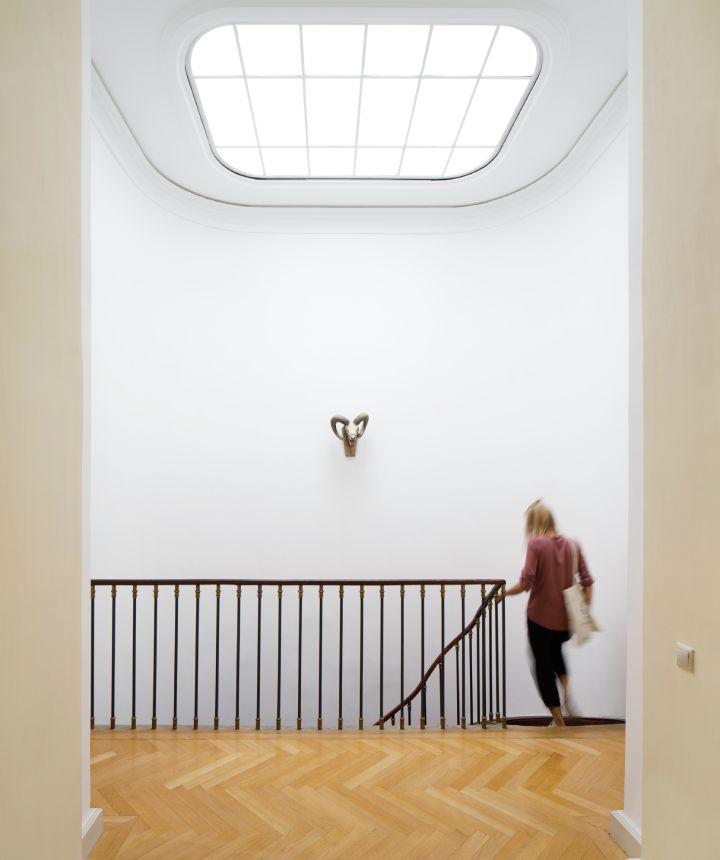
The staircase under the glass roof

A small and elegant wooden staircase leads to the upper floor. Crowned by a glass roof that brings natural light into the heart of the building, this remarkable architectural feature was designed by Miklós Ybl, who would later become one of the great figures of Hungarian architecture. It was at Fehérvárcsurgó that he began his career, working under the direction of Heinrich Koch.

Ybl would later design the Budapest Opera House, oversee the restoration of St. Stephen’s Basilica, create the Várkert Bazár on the banks of the Danube, as well as the Customs Palace, now home to Corvinus University.

Upstairs, the private apartments preserve several personal belongings of the palace’s last residents. It was in Daisy Wenckheim’s bedroom that István Károlyi was born in 1920. His typewriter, various personal objects, the suitcases carried into exile, and a Moroccan pouf tell the story of the family’s turbulent journey through the 20th century.

The private apartments
The Napoleon Room

NAMES, ALLIANCES AND LEGACIES

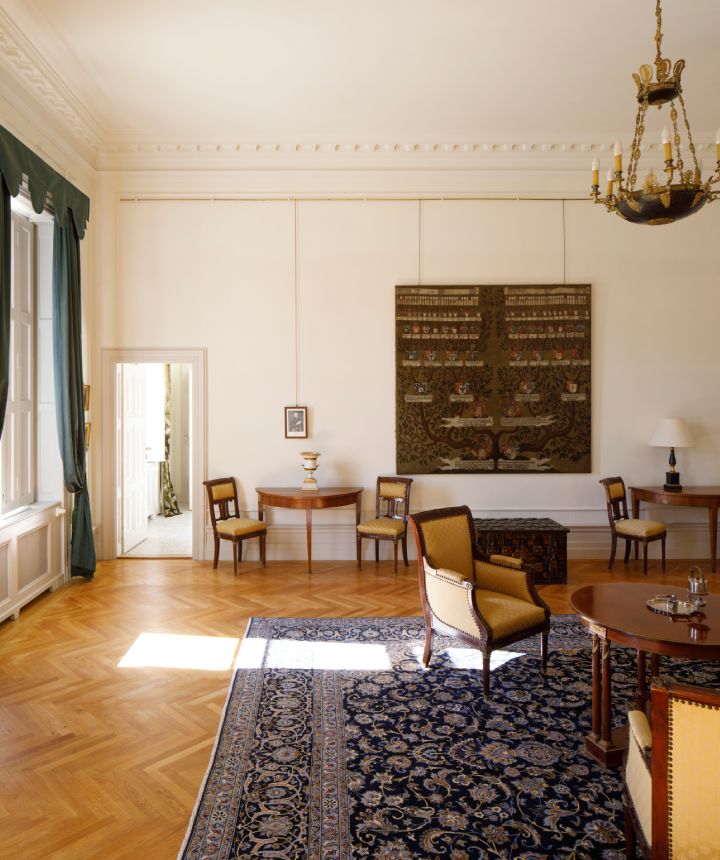
The Napoleon Room, named after its Empire-style furnishings, reflects the Károlyi family’s interest in history. Among its treasures is an exceptional painted family tree depicting Sándor Károlyi and Krisztina Barkóczy, created in 1712. Works of this kind allowed Hungarian noble families not only to celebrate their lineage, but also to affirm their status and prestige.

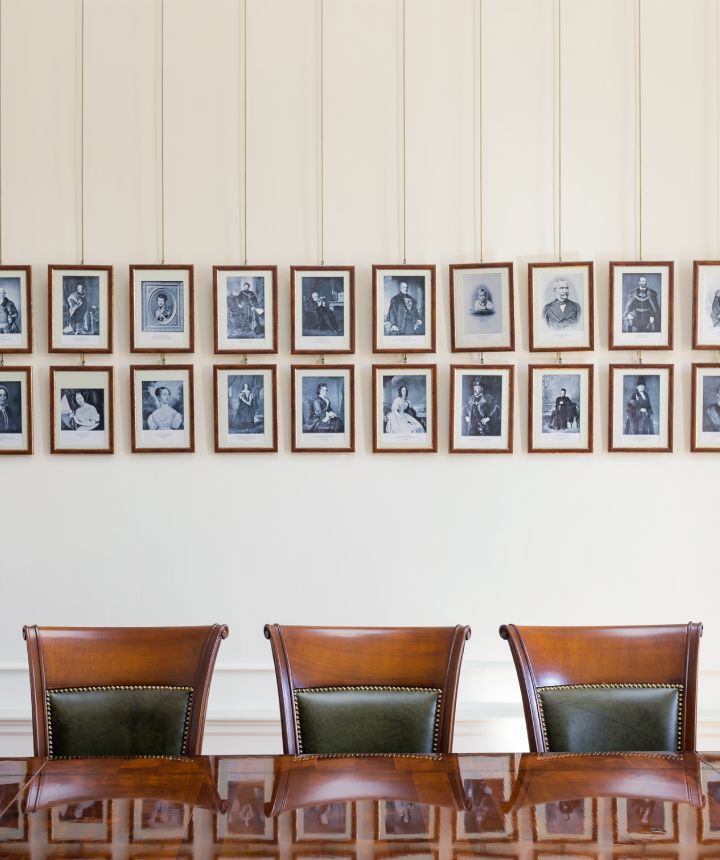
The Festetics Room, lined with ancestral portraits, evokes the alliances that connected the great families of the Hungarian aristocracy, where marriages forged lasting political, economic, and social bonds. Formerly a guest bedroom, it reflects the Károlyis’ ties with the Esterházy, Batthyány, Zichy, Pallavicini, Pálffy, Andrássy, and Széchenyi families, all among the leading aristocratic houses of the Kingdom of Hungary.

The Festetics Room
The Venetian Boudoir

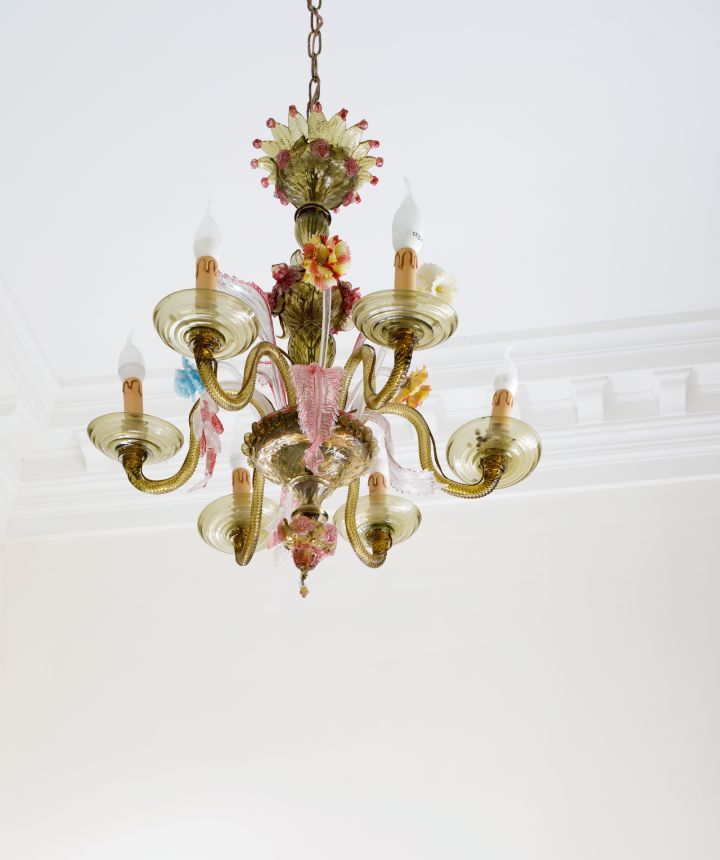
The Venetian Boudoir, once a private bathroom, now provides an intimate setting for a remarkable collection of drawings and watercolours depicting Venice. The works are by Suzanne Eisendieck and Dietz Edzard, German Post-Impressionist painters who settled in Paris and were the parents of Angelica Károlyi.

Their presence at Fehérvárcsurgó carries a symbolic meaning, reflecting Angelica’s dedication, together with her husband Georges Károlyi, to the restoration of the palace, and particularly her artistic contribution to the renewal of its interiors.

THE LIBRARY: A WINDOW TO THE WORLD

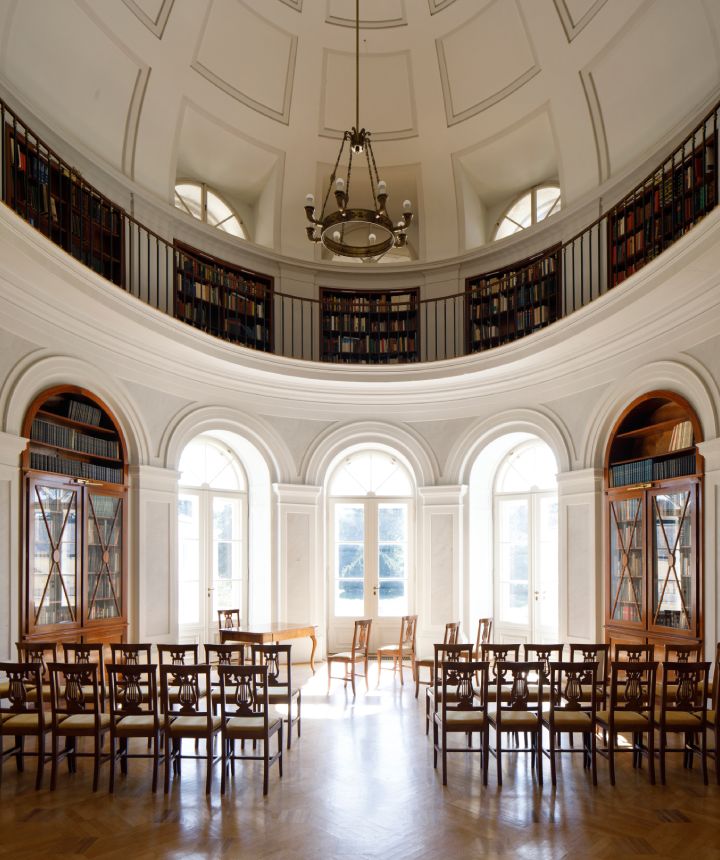
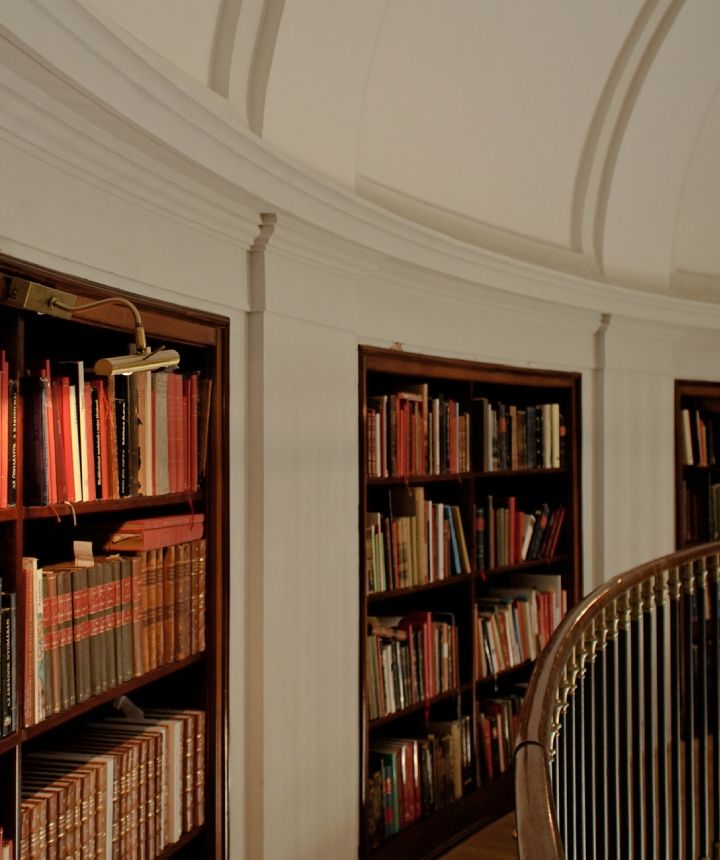
At the heart of the palace, the Oval Library is undoubtedly one of its most remarkable rooms. Created during the transformations of the 1910s, it is covered by a delicate reinforced concrete shell, an extraordinary architectural innovation for its time. A concealed door hidden among the bookshelves opens onto a spiral staircase leading to the upper gallery.

The library once held several thousand volumes in Hungarian, German, French, and English. In the great aristocratic residences, the library was a space of learning and discovery, a gateway to the wider world.

The Oval Library
The library and its upper gallery

At the end of the Second World War, Soviet soldiers threw the books out of the windows before setting them on fire. Today, the restored library houses the great European genealogy and heraldry collection of Professor Szabolcs de Vajay. The remaining collections of the documentation centre are preserved in the palace’s northern pavilion.

THE ART OF COLLECTING

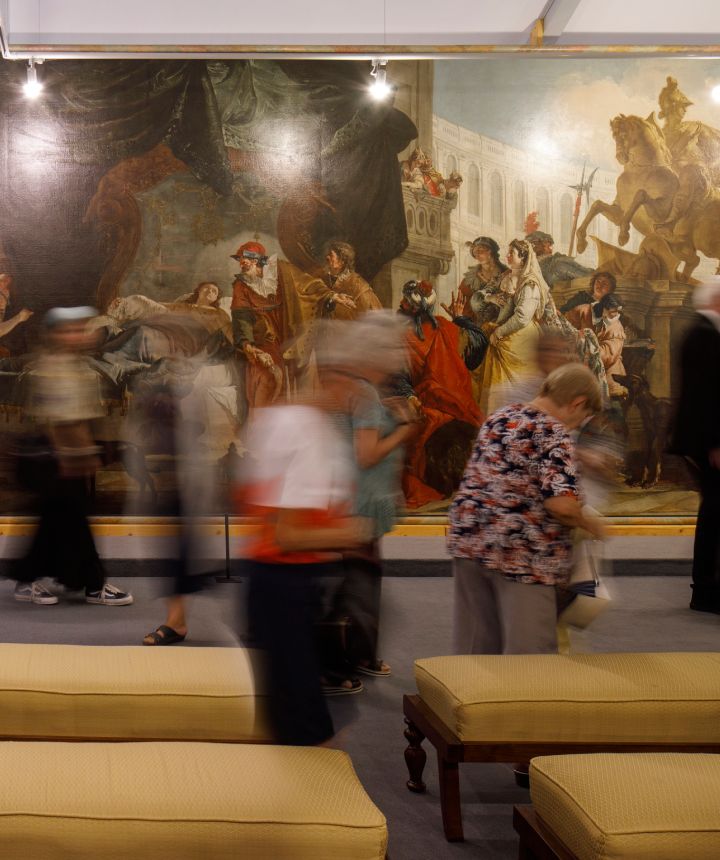
Originally painted in the 18th century for a Venetian palace, the paintings by Francesco Fontebasso were acquired by Geraldine Pálffy, mother of Joseph Károlyi, for her residence in Pest. They reflect the Hungarian aristocracy's appreciation of Italian art and culture. Monumental scenes from history and mythology - The Sacrifice of Iphigenia, The Continence of Scipio, and Antiochus and Stratonice - illustrate the heroic themes characteristic of Venetian painting.

Their restitution by the Museum of Fine Arts, Budapest, marks another important step in restoring the palace's historic heritage.

The paintings by Francesco Fontebasso
Recreating the interiors

RECREATING THE INTERIORS

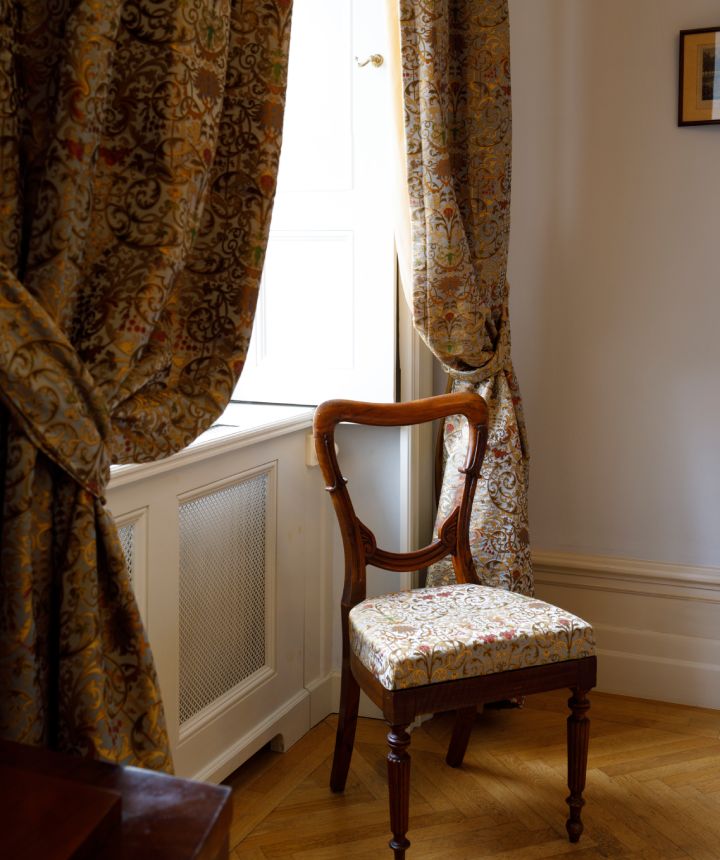
Most of the original furnishings disappeared during the Second World War. Some were taken away by the German army under the pretext of "safekeeping"; those that remained were destroyed during the Soviet occupation or dispersed in the years that followed.

Today, the interiors evoke once again the atmosphere of the former residence, thanks to extensive patronage. Houses such as Jean Roze, Pierre Frey, Nobilis, and Hope & Phillips generously donated the fabrics that now furnish the state rooms.

To learn more about the history of the palace and its restoration, click here.